

Reduce humidity, boost ventilation, and keep glass warmer to stop window condensation.
If foggy panes and wet sills show up every cold morning, you are not alone. I’ve spent years helping homeowners fix it without wasting heat or money. This guide shows how to stop condensation on windows in winter with clear steps, simple tools, and habits that work in real life.
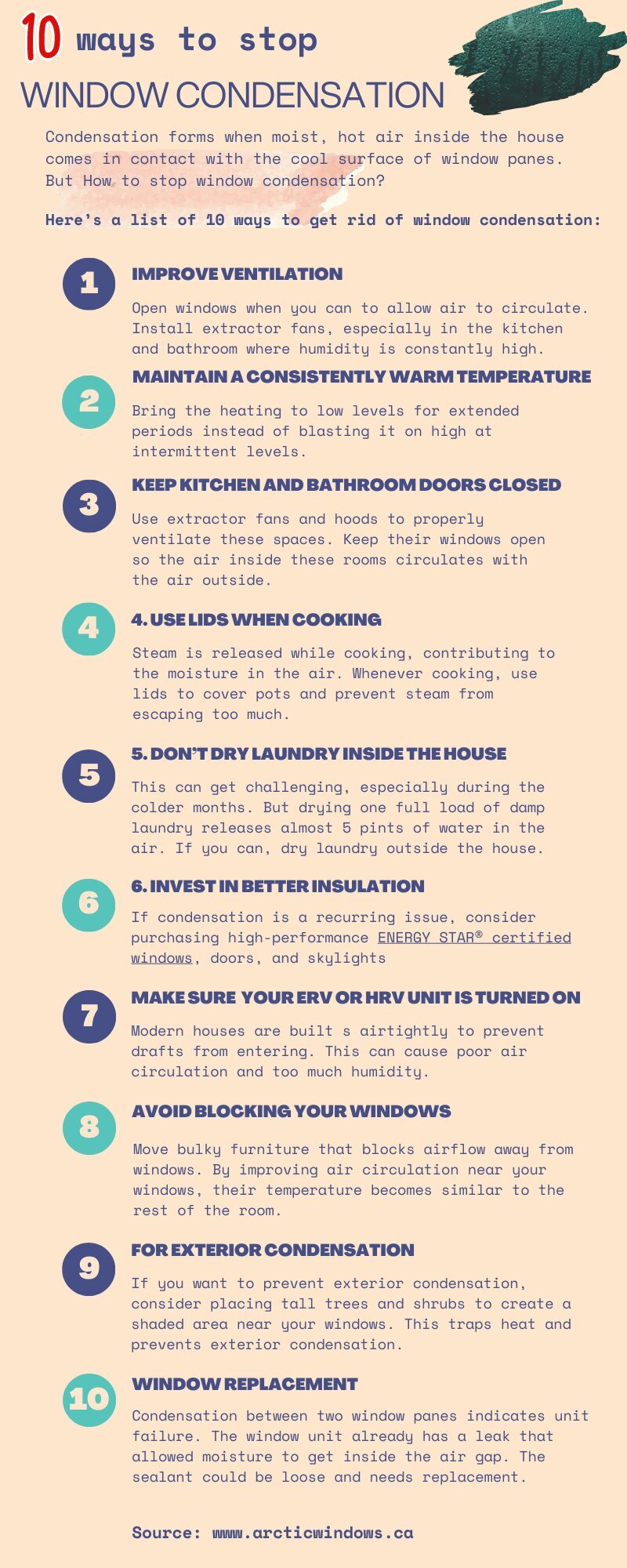
Why condensation forms on windows in winter
Warm indoor air holds moisture. When that air hits cold glass, it cools fast. The air can no longer hold all that water, so it drops on the glass as droplets. That is condensation.
Glass is often the coldest surface in your home. So windows become the first warning sign. The question of how to stop condensation on windows in winter is really about moisture, temperature, and airflow.
Two things matter most. Keep indoor humidity in check. Keep the glass a bit warmer. When you balance the two, the fog clears and the sills stay dry.

Quick fixes you can do today
Try these simple moves right now. They work fast and cost little.
- Run bath fans after showers. Let them run for 20 to 30 minutes to clear steam.
- Use the range hood on high while cooking. Keep lids on pots to cut steam.
- Crack a window for 10 minutes after showers or cooking. A short purge works well.
- Open blinds and curtains during the day. Trapped air gets humid and cool.
- Wipe water off glass each morning with a squeegee. Dry the sill too.
- Move plants away from windows. Group them in one room if you can.
- Stop drying clothes indoors. Vent the dryer outside and check the duct.
- Keep lids on aquariums. Add covers and reduce bubbling.
- Use ceiling fans on low, reverse setting. Gentle mixing warms glass.
- Set humidifiers lower or turn them off for a week. Test the change.
These are the fastest ways for how to stop condensation on windows in winter today. You will see a difference within days.

Control indoor humidity at the source
Moisture starts with daily life. Showers, cooking, laundry, plants, and even people add water to the air. Mastering how to stop condensation on windows in winter means lowering moisture at the source.
-
Everyday habits
- Put lids on pots. Use the range hood every time you cook.
- Take shorter, slightly cooler showers. Close the bathroom door to contain steam.
- Run bath fans during and for 20 to 30 minutes after each shower.
- Avoid portable humidifiers unless a doctor says you need one. If you use one, set 30 to 40 percent.
-
Bath and kitchen airflow
- Make sure fans vent outside, not into the attic.
- Clean fan grilles. Dust cuts airflow.
- If fans are weak, upgrade to a quiet, high-cfm model with a timer switch.
-
Basement and laundry
- Fix damp basements. Seal cracks and add a dehumidifier if needed.
- Use a vented dryer. Clean the duct and outside flap.
- Avoid air-drying clothes indoors in winter.
-
Plants and aquariums
- Group plants and move them away from cold glass.
- Cover aquariums and reduce aeration if glass fog is a problem.
Simple changes here cut gallons of water from your air each week.

Ventilation that actually works in winter
Fresh air sounds wasteful in winter, but smart ventilation can save you headaches and money. It clears moisture, odors, and pollutants.
- Use timed bath fans. Set them to run a few times a day for 20 minutes.
- Run the range hood whenever you cook. Duct it outside.
- If your home is very tight, consider a heat recovery ventilator or energy recovery ventilator. These swap stale, moist air with fresh air while keeping most of the heat.
- Check trickle vents on windows and ensure they are open and clean.
- Create short purge cycles. Open two windows on opposite sides for 5 minutes. The air refreshes, but the walls stay warm.
Ventilation is a pillar of how to stop condensation on windows in winter. It is simple, repeatable, and effective.

Warm up the glass
Warmer glass means less condensation. You can do this without cranking the heat.
- Use insulating window film kits. They add a clear, still air layer and can raise glass temperature several degrees.
- Add storm windows on the outside or inside. Good storms can rival new windows for warmth.
- Seal leaks around frames with weatherstripping and caulk.
- Use cellular shades with side tracks. Open them for several hours each day so air can wash the glass.
- Keep curtains open by day to let sun warm the glass. Close them at night, but leave a slight gap at the top or bottom to avoid trapped moisture.
- Redirect heat gently toward windows. A floor register deflector can help.
Another part of how to stop condensation on windows in winter is keeping glass warmer. Small changes add up fast.

Dehumidifiers: picking the right size and using them right
A good dehumidifier can be a hero in damp homes.
-
Sizing
- For a small room, a 20 to 30 pint unit is fine.
- For a basement or large area, pick 35 to 50 pints or more.
- If you smell must or see damp walls, size up.
-
Setup and settings
- Place it near the moisture source, not in a closed closet.
- Use continuous drain if possible so it can run without fuss.
- Set target humidity to 35 to 45 percent in winter.
- Clean the filter monthly.
If you struggle with how to stop condensation on windows in winter, a dehumidifier helps keep indoor air stable.
Find and fix hidden moisture problems
If your humidity stays high, look for leaks or wet materials.
- Check window seals and sills for water damage.
- Look under sinks, around toilets, and behind the fridge for drips.
- Inspect the attic for frost on nails or damp insulation. That signals warm, moist air is leaking up.
- Test the dryer vent flap outside. It should open and close freely.
- Walk the basement after rain. Look for wet spots or musty smells.
- Use a simple hygrometer in different rooms. Compare humidity to find hidden problems.
A leak will beat any plan for how to stop condensation on windows in winter. Stop the water and the fog follows.

What humidity level should you aim for?
Aim low enough to protect the glass, but high enough for comfort.
- 45 to 50 percent: Often fine in mild weather, not in deep cold.
- 35 to 40 percent: Good target for most winter days.
- 25 to 30 percent: Use when outdoor temps drop below 0°F to avoid frost.
- If windows still sweat, drop the setpoint 5 percent and retest.
Target numbers matter for how to stop condensation on windows in winter. Check humidity twice a day for a week and adjust.

Step-by-step plan for how to stop condensation on windows in winter
Follow this plan for how to stop condensation on windows in winter. It builds from easy to deeper fixes.
-
Day 1
- Open blinds by day. Squeegee glass each morning.
- Turn on bath and range fans for every shower and meal.
- Set any humidifiers to 30 to 35 percent or turn them off.
-
Week 1
- Clean fan grilles and confirm both vent outside.
- Add a $10 hygrometer. Track humidity morning and night.
- Seal obvious window drafts with weatherstripping.
- Install clear window film on the worst windows.
-
Week 2
- Move plants and cover aquariums.
- Add a fan timer in bathrooms.
- Check dryer vent and duct for lint and leaks.
- If humidity stays above 45 percent, add a dehumidifier.
-
Week 3 and beyond
- Consider storm windows or cellular shades with side tracks.
- Test short purge ventilation on very cold days.
- If you still have issues, schedule an energy audit to check air leaks and ventilation rates.
This sequence solves 90 percent of cases I see.
Personal notes from the field
A family I helped last January had puddles on every sill. They ran a humidifier at 50 percent, kept blackout curtains shut all day, and did long, hot showers. We cut the humidifier to 35 percent, added fan timers, opened blinds by day, and put film on the coldest windows. In three days, no more puddles. In two weeks, the glass stayed clear.
Common mistakes I see
- Tight curtains 24/7. They trap cold air and moisture.
- Weak bath fans that vent into the attic. That just moves water upstairs.
- Humidifiers set high because “dry air feels bad.” Often it is actually cold air or drafts.
- Ignoring the basement. A damp slab can feed the whole house.
Here is what finally solved how to stop condensation on windows in winter for them. It was not one magic product. It was a small stack of habits and a few cheap upgrades that played nice together.
Frequently Asked Questions of how to stop condensation on windows in winter
### Why do my new windows still get condensation?
Even great windows will fog if indoor humidity is too high. Lower humidity and add airflow, and the fog will clear.
Is window condensation bad for my home?
Frequent moisture can damage paint, drywall, and wood. It can also invite mold, so it is best to fix it early.
What humidity level should I set in winter?
Start at 35 to 40 percent. If it is below 0°F outside and you still see fog, drop to 25 to 30 percent.
Do dehumidifiers use a lot of energy?
Modern units are efficient, and the cost is modest. They often save money by protecting your home and reducing mold risk.
Will replacing windows fix it for good?
Better windows help, but they are not a cure if humidity is high. Fix moisture at the source and improve ventilation first.
Is cracking a window in winter wasteful?
A short, 5 to 10 minute purge replaces humid air fast with little heat loss. The walls and furniture hold heat, so the space recovers quickly.
Can plants cause window condensation?
Yes, many plants add moisture to the air. Group them away from windows or reduce watering during very cold snaps.
Conclusion
You can keep your windows clear all winter with a simple plan. Lower indoor humidity, add steady ventilation, and warm the glass. Check for hidden moisture, and use tools like window film and a dehumidifier when needed.
Start with two changes today. Run your bath and range fans longer, and open blinds by day. Watch your humidity for one week, then adjust. If this helped, subscribe for more home tips or drop a question in the comments.