

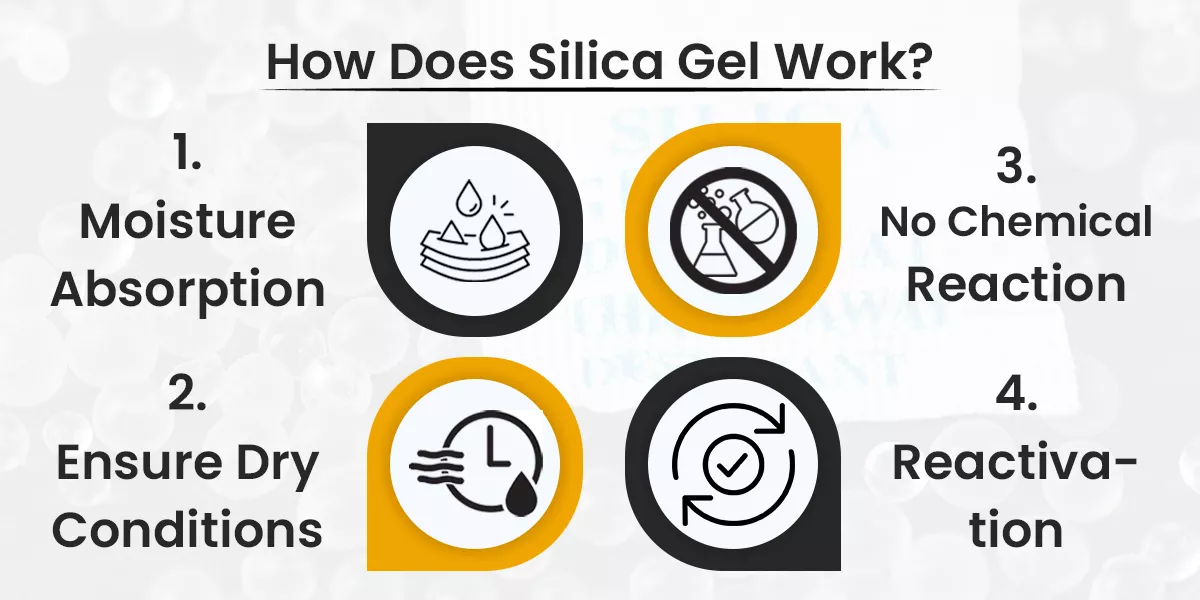
Silica gel works by adsorbing water vapor onto its porous surface.
Curious about how does silica gel work behind the scenes? You see those tiny packets in shoe boxes, camera bags, and vitamin bottles for a reason. I’ve used them for years across labs and real-life projects, and I’ll show you how does silica gel work, why it’s so effective, and how to get the most from it without guesswork. Stick around for practical tips, science made simple, and clear steps you can use today.
What is silica gel?
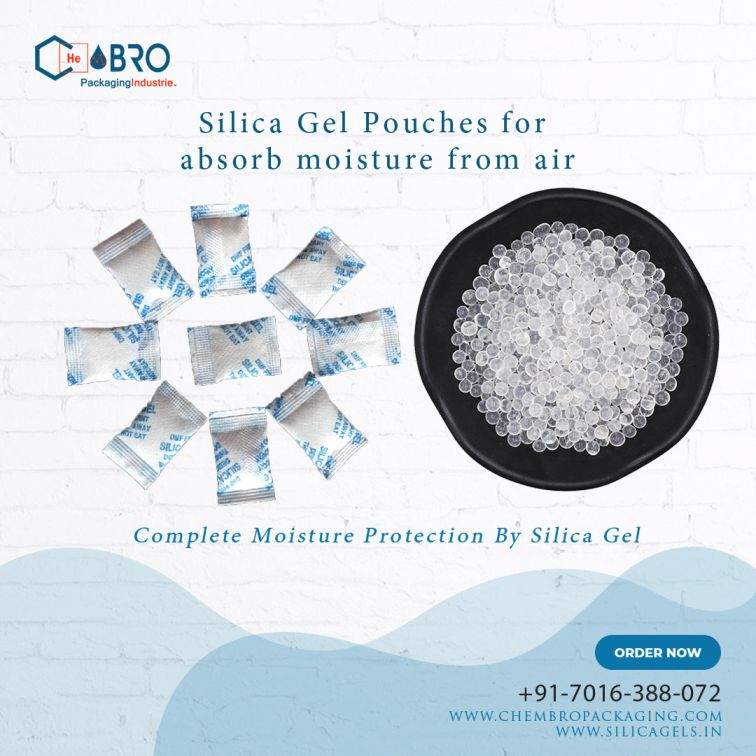
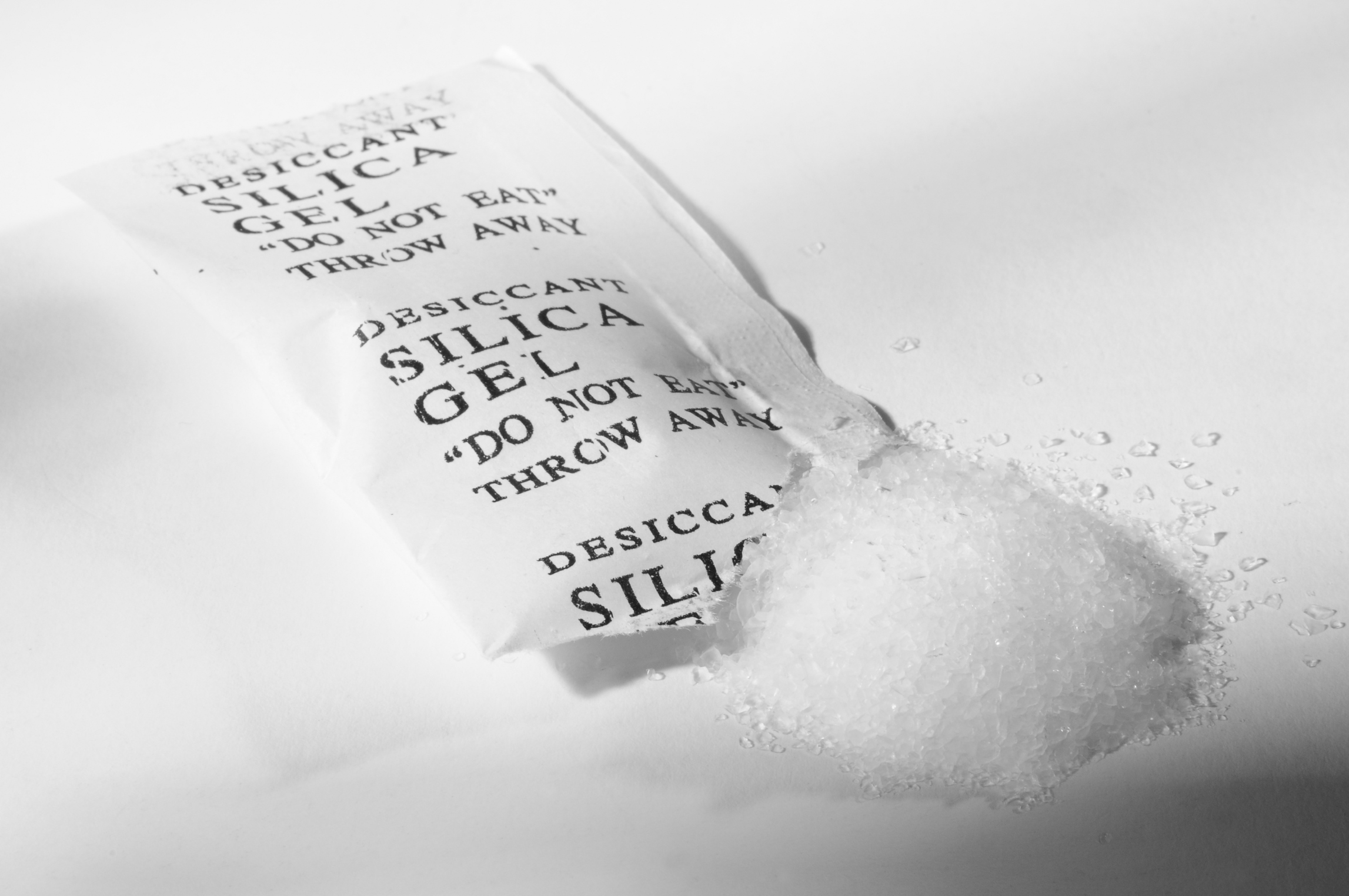
Silica gel is a solid form of silicon dioxide. It looks like clear or white beads. It is not a liquid or a gel, despite the name. Each bead is full of tiny pores. Those pores pull in water vapor from the air. That is how does silica gel work in almost any container.
Inside, the surface area is huge. A teaspoon of silica gel can have the area of a tennis court. This massive area is why it grabs water so well. It holds water on its surface, not inside like a sponge.
There are a few common types:
- Non-indicating beads are clear or white. They do not change color when wet.
- Indicating beads change color as they take on water. Classic blue-to-pink uses cobalt chloride. Safer orange-to-green options exist and are now more common.
- Bead sizes vary. Smaller beads work faster. Larger beads resist dust and crush better.
Capacity depends on humidity. At moderate humidity, silica gel can hold about 20 to 30 percent of its weight in water. At high humidity, it can climb above that range. This is one key part of how does silica gel work in real life.
The science: adsorption, not absorption
How does silica gel work at the molecular level? It uses adsorption. That means water sticks to the surface of the bead. It does not soak deep inside like a sponge. The surface has silanol groups. These are small chemical sites that love water. They grab water with weak bonds. Think of it like Velcro for moisture.
At low humidity, water forms a thin layer on the surface. As humidity rises, more layers build. In the pores, water can also condense into tiny droplets. This is called capillary condensation. It boosts the amount of water held at higher humidity.
This process is reversible. Add heat, and water lets go. That is why you can dry silica gel in an oven. It does not break down with normal use. That reversibility is core to how does silica gel work again and again.
Temperature and humidity matter:
- Warm air holds more moisture. Silica gel can still work, but capacity shifts.
- At higher humidity, silica gel fills faster.
- At very low humidity, it is great at pulling water to very dry levels.

Why silica gel works so well
Silica gel is popular for simple reasons that tie back to how does silica gel work:
- High surface area means strong moisture pickup.
- A tuned pore size traps water vapor efficiently.
- It is stable, noncorrosive, and odorless.
- It works over a wide humidity range.
- It can be reactivated by heating, often many times.
From lab data and real use, response is fast when air can flow. It shines in closed spaces. It will not lower humidity in a whole room by itself, but it can keep a box or case dry for a long time.

Everyday uses that make sense
If you wonder how does silica gel work in your daily life, here are proven use cases:
- Electronics and camera gear Keep lenses clear and sensors dry in cases.
- Medications Keep tablets crisp and reduce clumping in bottles.
- Food storage Keep jerky, dried fruit, or spices dry in sealed jars.
- Shoes and bags Cut odors and moisture in closed spaces.
- Tools and gun safes Reduce rust by lowering humidity in enclosed cabinets.
- Seed saving Maintain dry seeds for higher germination later.
- Documents and photos Protect prints and papers in storage bins.
Tip from the field: I keep a small vented box of silica gel in my camera bag. It keeps condensation away after a cold morning shoot. That is how does silica gel work best—close to what you want to protect.

How to use silica gel the right way
Here is a simple setup that works:
- Use the right amount A common rule is 5 to 10 grams per shoe box. For larger containers, scale up. Use more in humid seasons.
- Ensure airflow Do not bury packs under tight fabric. Give packs air on at least one side.
- Seal the space Use a tight container or case. Silica gel cannot fight open room air.
- Check indicators If your beads change color, watch them. Pink or green means they are full.
- Replace or recharge Swap packs if moisture returns. That is a sign they are saturated.
Common mistakes to avoid:
- Leaving containers unsealed The gel will keep pulling water from the whole room.
- Overheating during drying This can damage beads or melt sachets.
- Using it for liquid spills It is for vapor control, not soaking puddles.
- Mixing with strong odors Silica gel can adsorb smells. That can spread to stored items.
If you ever asked how does silica gel work but felt unsure, follow these steps. They cover 90 percent of use cases.
Regenerating and reusing silica gel
One perk of how does silica gel work is its easy reusability. You can dry it and use it again. Here is how:
- Oven method Spread beads in a thin layer on a tray. Heat at 200 to 250°F (93 to 120°C) for 1 to 3 hours. Stir once for even drying. Let cool in a sealed container.
- Microwave method Use only if the manufacturer allows it. Heat in short bursts at low power. Watch closely. The water heats fast and can overheat the pack.
- Sunlight or warm, dry air This helps a little but is slower and not as complete.
How often can you recharge? Many times. Beads may last dozens of cycles. Replace if they crack into dust, smell odd, or fail to dry gear.
Indicating beads will shift color back when dry. With cobalt chloride types, blue means dry. Pink means wet. With safer orange types, orange means dry and green means wet. If you worry about safety, choose cobalt-free beads. That simple choice still keeps how does silica gel work for you without extra risk.

How does silica gel work vs. other desiccants?
If you compare how does silica gel work with other options, this quick guide helps:
- Clay (bentonite) Cheaper and fine for moderate humidity. Lower capacity at high heat. Not as good at very low humidity.
- Molecular sieve Strong at very low humidity and higher temperatures. More expensive. Can be overkill for home use.
- Calcium chloride Very high capacity. Turns into liquid brine as it works. Best for room dehumidifiers, not for gear bags.
- Rice Not a desiccant you should trust. Low capacity and slow. Poor for saving wet electronics.
In most home and hobby cases, silica gel is the right balance. It is safe, reusable, and stable. That is why how does silica gel work so well across many industries.

Safety and environmental notes
Silica gel is generally non-toxic. The packets can be a choking hazard for kids and pets. Keep them out of reach. The “Do Not Eat” warning is about choking and mix-ups, not poison.
Indicating beads with cobalt chloride can be harmful if swallowed or inhaled as dust. Choose orange or green cobalt-free beads if safety is a concern. Seal used gel in a bag before disposal. Reuse and recharge when possible to cut waste. That is a smart, safe way to keep how does silica gel work for you long-term.
Frequently Asked Questions of how does silica gel work
How does silica gel work in a sealed box?
It adsorbs water vapor until the air reaches a lower, stable humidity. The sealed space lets it control moisture without fighting the whole room.
Can silica gel save a wet phone?
It can help reduce residual moisture in a dry, sealed container. It will not fix liquid damage inside the device or under chips.
How many packs do I need?
Use more for larger spaces and high humidity. Start with 10 to 20 grams per gallon-size container, then adjust.
How long does silica gel last?
It lasts until saturated, which can be days to weeks in a sealed space. Recharge it in the oven to keep using it.
Is silica gel safe for food storage?
Yes, if it is food-safe and kept in its own packet. It should not touch the food directly unless the product is designed for contact.
What temperature should I use to recharge silica gel?
Aim for 200 to 250°F (93 to 120°C) for 1 to 3 hours. Higher heat risks damaging the packet or beads.
Why do some beads change color?
Those are indicating beads. They shift color as they absorb water, showing you when to recharge them.
Conclusion
Now you know how does silica gel work and why it is a go-to moisture solution. It grabs water vapor on its vast surface, recharges with simple heat, and protects gear, food, papers, and more. Use the right amount, seal your space, and recharge on schedule for best results.
Put a few packets to work today in your most sensitive spaces. Want more practical guides like this? Subscribe, share your experience, or drop a question so we can help you dial in your setup.