

Choose a gun safe absorber for rust control; general-purpose absorbents are riskier in safes.
If you want clear answers on gun safe absorber vs general purpose, you are in the right place. I’ve spent years setting up safes, testing silica gel cans, dehumidifier rods, and even cheap room absorbers. In this guide, I break down what truly works, what to avoid, and how to keep your guns rust-free without stress.
What does gun safe absorber vs general purpose really mean?
When people compare gun safe absorber vs general purpose, they are talking about moisture control. Gun safe absorbers are built for enclosed metal boxes with firearms. General-purpose absorbers are made for rooms, closets, and bathrooms.
The goal is simple. Stop rust, mold, and swelling in a small sealed space. I will explain why the right choice matters for cost, safety, and your firearms. Gun safe absorber vs general purpose may sound small, but it affects reliability and value.

Quick definitions and how they work
Gun safe absorbers are products designed for safes. These include silica gel canisters, rechargeable desiccants, molecular sieves, VCI emitters, and low-watt dehumidifier rods. They are sealed, spill-proof, and sized for a safe.
General-purpose absorbers include tubs, bags, or pouches often filled with calcium chloride. You see them as closet or bathroom moisture removers. They can drip brine and often need more airflow than a safe provides.
In gun safe absorber vs general purpose, both fight moisture. But only one is optimized for metal, ammo, and wood stored in a tight space.
Key differences that matter for your guns
- Moisture target: Guns do best near 40–50% RH. Many general-purpose tubs can swing RH or pool liquid. Gun safe units aim for steady, modest drying without spills.
- Spill risk: Calcium chloride turns into salty brine. One spill can etch bluing and corrode fast. Silica gel canisters and rods do not leak liquid.
- Recharge and lifespan: Gun safe canisters recharge in an oven or via power. General tubs need frequent refills and create waste.
- Airflow needs: Safes have low airflow. Dehumidifier rods create gentle convection. Tubs work better in open spaces.
- Safety and smell: Fragrances and dust from general products are not great for guns or optics. Gun safe products avoid scents and are sealed.
In short, gun safe absorber vs general purpose is about fit and risk. The right tool keeps RH in range and does not introduce new hazards.

When should you choose each option?
- Choose a gun safe absorber if you store blued steel, optics, or wood stocks. It is the safe, long-term choice.
- Choose general-purpose only for a temporary fix outside a safe. Do not place liquid-based tubs inside a safe with firearms.
I advise gun safe absorber vs general purpose users to pick a hybrid. Use a rod for baseline warmth and a silica canister for spikes. That combo is simple and proven.
Types of gun safe absorbers and how to use them
Silica gel canisters
These pull water vapor and hold it. Many have a color window that turns pink when full. You recharge them in an oven at 250–300°F until the beads turn back to blue or orange.
Tips:
- Place one canister per 3–5 cubic feet as a start.
- Recharge every 2–8 weeks based on RH and opening frequency.
Molecular sieve packs
These are stronger than standard silica. They grab moisture at lower humidity. Great for very damp areas or fire safes.
Dehumidifier rods
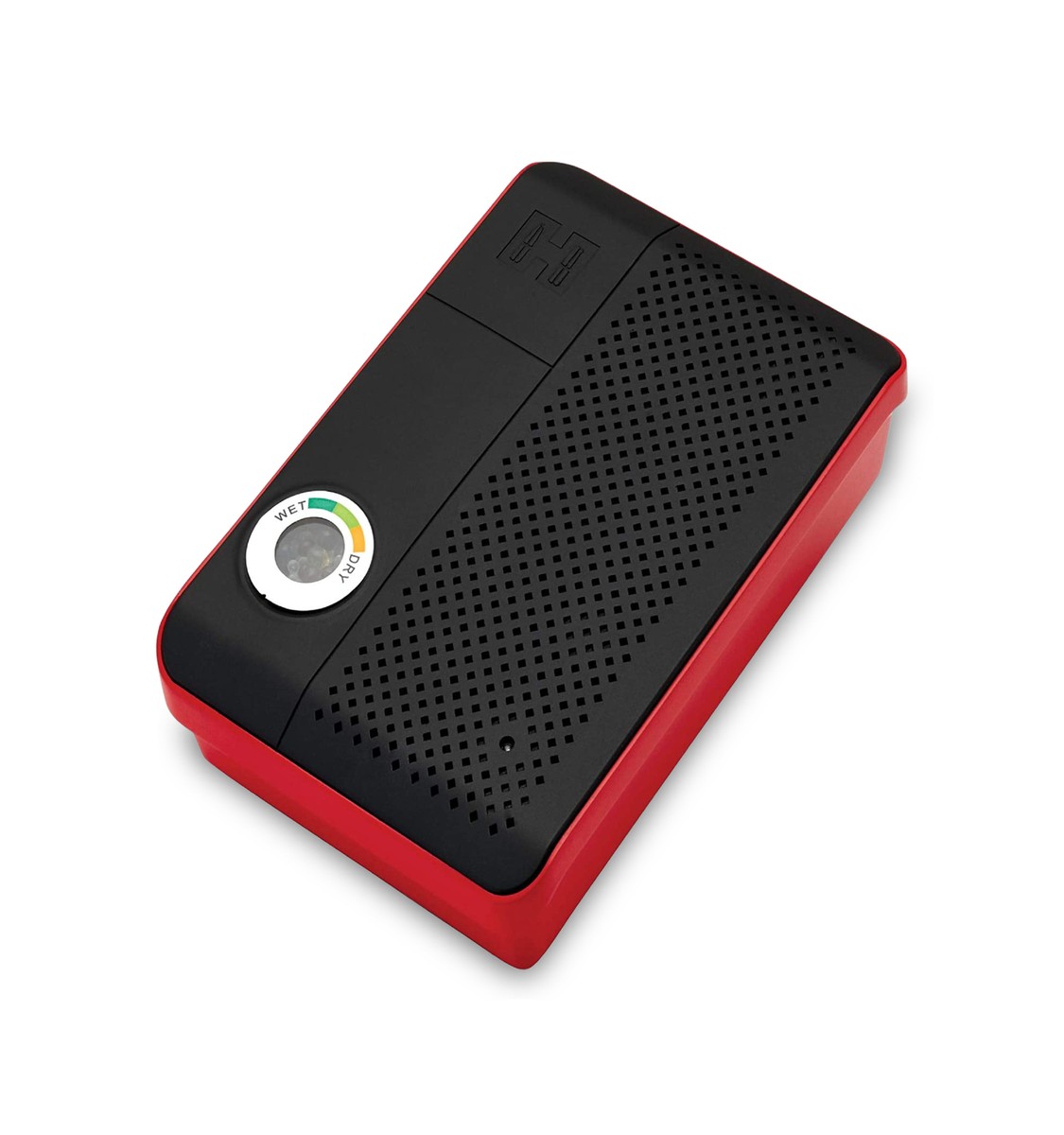
Low-watt rods warm the safe a few degrees. Warm air lowers relative humidity and moves air gently. They do not remove water but prevent condensation.
Tips:
- Mount near the bottom, run wire through the pass-through.
- Pair with a canister if your climate is very humid.
VCI (vapor corrosion inhibitor)
VCI releases a safe vapor that bonds to metal and blocks corrosion. Use it as a backup layer along with desiccants.
In the debate of gun safe absorber vs general purpose, these safe-ready tools win for control and safety.

What about general-purpose absorbers?
General-purpose products like calcium chloride tubs pull a lot of moisture. They work in closets and garages. But in a safe, they can pool liquid and leak salt brine.
Common issues:
- Spills can ruin a finish overnight.
- They may over-saturate in a tight space and need frequent changes.
- Some have scents that do not belong around optics or ammo.
Gun safe absorber vs general purpose is about risk. Your safe is not a bathroom. Use gear designed for firearms.

Humidity targets, sizing, and placement
Your goal is stable RH between 40% and 50%. Under 35% for long periods can dry wood stocks. Above 60% risks rust and mold. Use a hygrometer to verify.
Sizing tips:
- Small safe: 1 silica canister plus a 12–18 inch rod.
- Medium safe: 2 canisters plus a rod.
- Large safe: 2–3 canisters plus a rod, add VCI for insurance.
Placement matters:
- Put rods low to drive air up.
- Put canisters on a shelf near the center.
- Leave small gaps between guns for airflow.
These steps make gun safe absorber vs general purpose a win for the safe-focused system.
Monitoring and maintenance schedule
- Use a hygrometer: Check RH weekly at first. Aim for 40–50%.
- Recharge cycle: Bake silica when the indicator changes color. Many need 2–8 weeks.
- Power check: Verify rod warmth with a touch test. It should feel gently warm.
- Seasonal review: In spring and fall, adjust canister count or add a second rod.
This simple plan makes gun safe absorber vs general purpose choices easy to maintain.
Real-world lessons from the shop
I once tested a big closet tub in a cheap safe in summer. It slurped water fast and formed brine. A small tip at the corner and I had a rust bloom on a 1911 slide by morning.
I switched to a 12-inch rod plus a 750-gram silica can. RH dropped from 68% to 44% in two days. No spills. No smells. That is why I lean hard toward gun safe absorbers.
When friends ask about gun safe absorber vs general purpose, I tell them to avoid liquid tubs in safes. The risk is not worth it.
Cost, value, and long-term math
- Upfront: Rods cost a bit more, but last for years. Silica canisters are mid-priced and reusable.
- Ongoing: Electricity for rods is low. Baking silica costs pennies. General tubs need constant refills.
- Value: One avoided rust job can pay for your entire setup.
When you do the math on gun safe absorber vs general purpose, safe-focused gear wins on total cost of ownership.
Common mistakes to avoid
- Using calcium chloride tubs inside a safe. Brine is corrosive and spills happen.
- Skipping a hygrometer. You cannot manage what you do not measure.
- Overstuffing the safe. No airflow means damp corners.
- Forgetting to recharge. Set a calendar reminder.
- Ignoring the door seal. A poor seal lets in humid air.
These simple fixes tip the balance in gun safe absorber vs general purpose choices.
Special cases: fire safes and coastal homes
Fire safes often use drywall-like insulation. It can release moisture, raising RH early on. Expect higher moisture for the first months.
If you live near the coast, humidity is relentless. Use both a rod and larger silica. Add VCI for a backup layer on high-value pieces.
In these tough cases, gun safe absorber vs general purpose is not even close. Choose safe-grade tools.
Setup checklist you can follow today
- Measure your safe’s cubic feet.
- Install a dehumidifier rod near the bottom.
- Add one or more silica canisters near the center.
- Place a digital hygrometer at eye level.
- Check RH in 24 hours. Aim for 40–50%.
- Recharge silica when the color changes.
- Review each season and adjust.
Use this to settle the gun safe absorber vs general purpose debate in your own home.
Frequently Asked Questions of gun safe absorber vs general purpose
Is silica gel better than calcium chloride for a gun safe?
Yes. Silica gel is dry, reusable, and spill-free, which suits safes. Calcium chloride turns to brine and can leak onto metal.
What RH should I aim for inside a gun safe?
Target 40–50% RH. This range protects metal and avoids drying out wood stocks.
Do dehumidifier rods remove moisture?
Not directly. They warm the air a few degrees, lowering relative humidity and reducing condensation.
Can I use a general-purpose room absorber in a pinch?
I would not use it inside a safe. If you must, place it outside the safe in the room to lower ambient humidity.
How often do I recharge a silica canister?
It depends on climate and how often you open the safe. Expect every 2–8 weeks; the color indicator will guide you.
Does VCI replace desiccants in a safe?
No. VCI adds a protective layer but does not control RH. Use it with silica or a rod for best results.
Conclusion
Choosing between gun safe absorber vs general purpose comes down to fit, safety, and control. Safe-grade silica canisters, dehumidifier rods, and VCI are designed for closed spaces, metal parts, and optics. They avoid spills, hold steady RH, and save you money over time.
Set up a simple system today. Add a rod, place a silica canister, and watch your hygrometer. If this helped you weigh gun safe absorber vs general purpose, share it with a friend, subscribe for more tips, or drop your questions in the comments.