

Charcoal bags tackle odors, while moisture absorbers lower humidity and curb damp.
Choosing between charcoal bags vs moisture absorbers comes down to your goal. I’ve tested both in cars, closets, basements, and a leaky RV. In this guide, I break down how each one works, where they shine, and how to use them. If you want clear answers on charcoal bags vs moisture absorbers, you’re in the right place.
What Are Charcoal Bags?
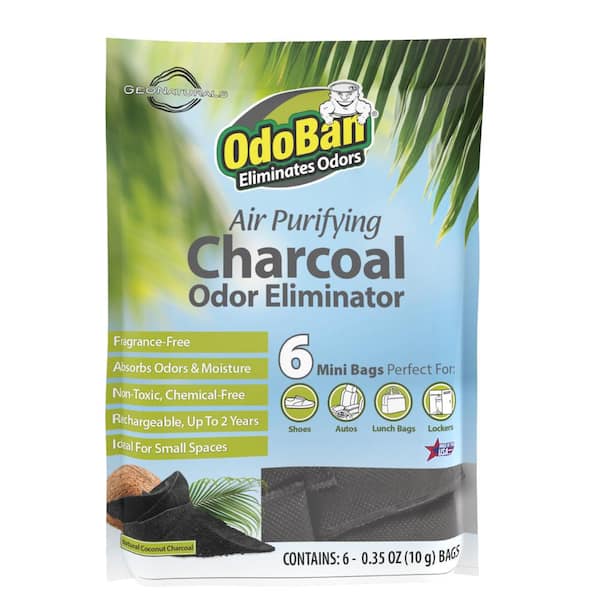
Charcoal bags are small fabric pouches filled with activated charcoal. The charcoal has tiny pores that trap odors, gases, and some chemicals in the air. This process is called adsorption. It does not change the charcoal, so you can recharge it and use it again.
Most charcoal bags can last 12 to 24 months. You can refresh them by placing them in the sun for a few hours each month. They are simple, scent-free, and safe to use around kids and pets.

What Are Moisture Absorbers?
Moisture absorbers are products that pull water from the air. Common types include silica gel, clay, and calcium chloride. Silica gel can take in a lot of water for its size. Calcium chloride can pull in even more and turn into a brine.
These products help keep the air dry. That helps prevent mold, mildew, and musty smells. Many are disposable, but some silica gel packs are oven-rechargeable and reusable.

Charcoal Bags vs Moisture Absorbers at a Glance
Here’s how charcoal bags vs moisture absorbers stack up in real life use.
- Main job: Charcoal bags remove odors and some VOCs. Moisture absorbers reduce humidity.
- Odor control: Charcoal bags stand out for smoke, pet, and food smells. Moisture absorbers help with musty odors from damp areas.
- Humidity control: Moisture absorbers win by a wide margin. Charcoal bags have little impact on humidity.
- Mold prevention: Moisture absorbers lower RH below 60%, which helps stop mold. Charcoal bags alone are not enough for mold risk.
- Reuse and upkeep: Charcoal bags last up to two years with a monthly sun recharge. Some silica gel can be baked to recharge. Calcium chloride is single-use.
- Cost: Charcoal costs more upfront but less over time for odor issues. Moisture absorbers cost more over time in wet areas but do the job.
- Safety: Charcoal is low risk. Calcium chloride can leak brine, so keep upright and away from metal.
- Eco impact: Charcoal bags are often made from bamboo and cotton. Moisture absorbers use plastic shells and salts; check recycling rules.

How They Work: Science Made Simple
Activated charcoal has a huge internal surface area. A single gram can have hundreds of square meters of pores. These pores trap odor molecules like a sponge holds water, but on the surface only. That is why recharging in the sun helps release some trapped compounds.
Moisture absorbers work by pulling water vapor from the air. Silica gel holds water in its pores. Calcium chloride goes even further. It pulls in water and turns into liquid brine. Lab tests show silica gel can hold 20–40% of its weight in water depending on humidity. Calcium chloride can absorb several times its weight.
This is the key in charcoal bags vs moisture absorbers. Charcoal targets smells. Moisture absorbers target water in the air.

Best Use Cases
Picking the right tool is half the win. Here’s when to use each.
- Cars and gym bags: Use charcoal bags to fight odors without scent. They work well in small, closed spaces.
- Closets and shoes: Charcoal bags keep things fresh. Add a small silica gel pack if humidity is a problem.
- Bathrooms and basements: Use moisture absorbers to lower humidity. This helps reduce mold and mildew risk.
- Kitchens and pantries: Charcoal bags help with food odors. Use moisture absorbers only if you see damp.
- RVs, boats, and storage units: Use moisture absorbers during damp months. Use charcoal bags for odor control when stored.
In short, for charcoal bags vs moisture absorbers, match the product to the problem: smell vs damp.

Real-World Tests and Lessons Learned
I ran a simple test in a tiny basement room after a summer storm. A charcoal bag knocked down the musty smell a bit, but the room still felt clammy. A calcium chloride tub cut the damp in two days and stopped the smell. The lesson: odors from damp often mean you need to remove moisture first.
In my car, a charcoal bag helped after a fast-food run. It also kept pet odors down, without perfume. Moisture absorbers did little there because the humidity was normal.
I once left a calcium chloride tub on a metal shelf. A small spill left rust marks. Now I place them in a tray and check them weekly. Small habits prevent bigger headaches.

How to Choose the Right Option
Use this quick checklist when comparing charcoal bags vs moisture absorbers.
- Your main issue: If you smell smoke, pets, or food, pick charcoal. If windows sweat or you feel clammy air, pick a moisture absorber.
- Space size: Small areas do well with charcoal bags. Bigger or wetter spaces need moisture absorbers.
- Reuse goals: Choose charcoal or oven-safe silica gel if you want to recharge. Choose calcium chloride for heavy-duty damp.
- Safety and mess: Charcoal is low mess. Calcium chloride can leak brine, so use trays and keep it upright.
- Budget: Charcoal can be cheaper long-term for odor. Moisture absorbers are worth it in damp zones.
How to Use and Maintain Them
Get the most from each option with simple steps.
Using charcoal bags
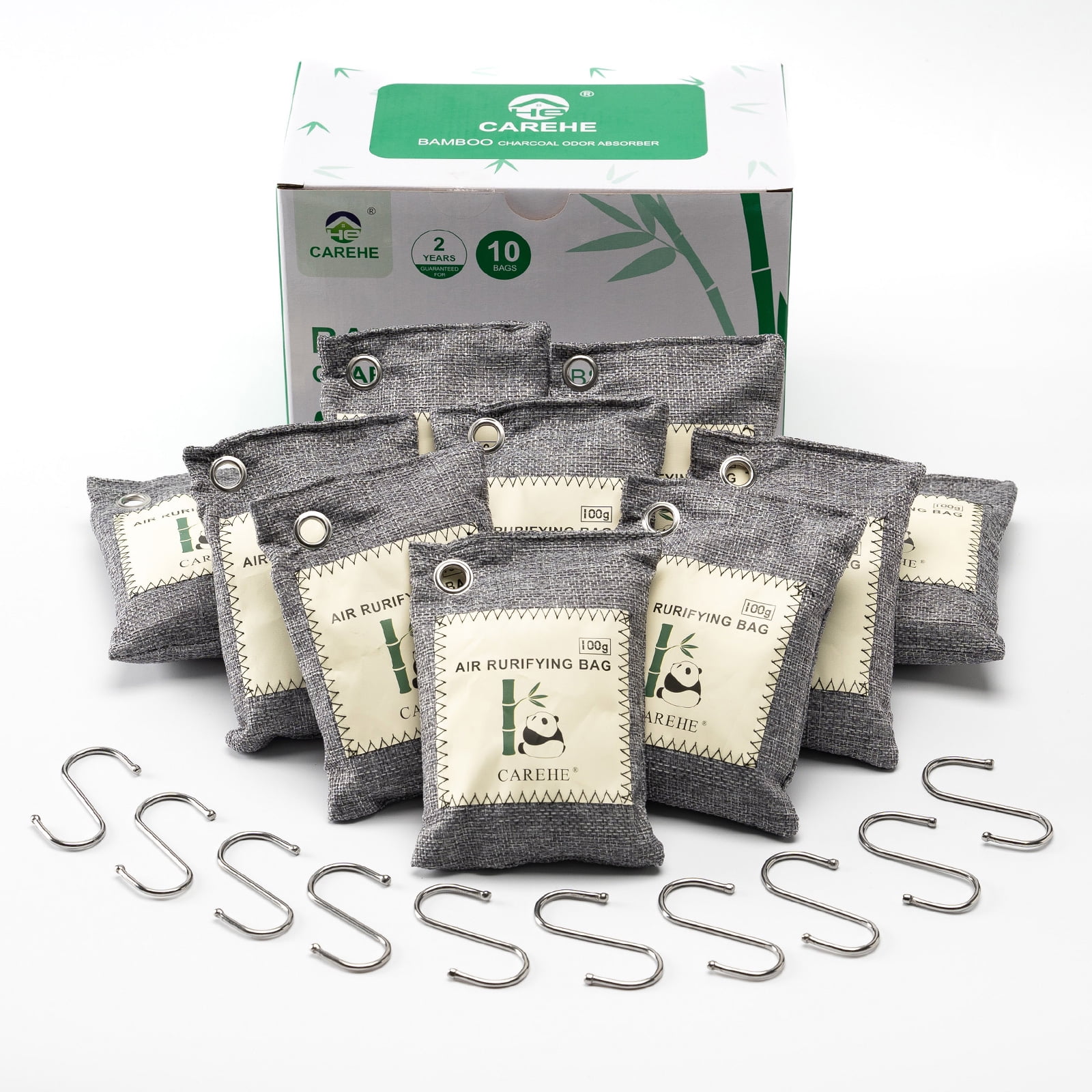
- Place bags near odor sources or where air flows.
- Recharge in direct sun for 2–4 hours each month.
- Rotate bags between rooms for even use.
- Replace after 12–24 months or when performance drops.
Using moisture absorbers
- For silica gel: Place in closed areas. Recharge in the oven as the label states.
- For calcium chloride: Keep upright in a stable tray. Check weekly. Empty brine as directed on the label.
- Use enough units for the room size. One small tub will not dry a big basement.
- Track humidity with a hygrometer and aim for 40–55% RH.
Safety, Disposal, and Environmental Impact
Charcoal bags are non-toxic and scent-free. They are safe for homes with kids and pets. When they wear out, cut them open and mix the charcoal into garden soil. It can help with smell and soil structure.
Moisture absorbers need more care. Keep calcium chloride away from metal items and skin. If it spills, wipe and rinse the area well. Many labels say to pour the brine down a drain with lots of water. Always follow the product instructions and local rules.
For eco goals, charcoal bags create less waste. Some moisture absorber refills reduce plastic use. If you value low waste, pick rechargeables like charcoal bags or oven-safe silica gel.
Cost Breakdown Over Time
Let’s compare costs you might see in a year. Prices vary by brand and size, so use this as a guide.
- Charcoal bags: One mid-size bag can cost a bit upfront. But it can last up to two years. That makes the monthly cost low for odor control.
- Silica gel: Reusable packs cost more at first but last years with oven recharges. Good long-term value in small spaces.
- Calcium chloride: Low cost per unit, but you replace them often. In a wet basement, you may need several tubs per season. The monthly cost adds up, but the results are strong.
If you are torn on charcoal bags vs moisture absorbers, think about total cost per month and your main problem. Odor only? Charcoal wins on value. Damp control? Moisture absorbers are worth the spend.
Frequently Asked Questions of charcoal bags vs moisture absorbers
Do charcoal bags reduce humidity?
Charcoal bags have a small effect on moisture at best. They are designed for odors and gases, not for major humidity control.
Are moisture absorbers safe to use in closets?
Yes, but keep calcium chloride tubs upright and on a tray. Check them often and keep them away from clothes and metal items.
Can I use charcoal bags and moisture absorbers together?
Yes, and it often works well. Use moisture absorbers to cut humidity, then charcoal bags to polish the air and remove lingering odors.
How long do charcoal bags last?
Most last 12–24 months with monthly sun recharges. Replace them when you notice weaker results.
Will moisture absorbers prevent mold?
They help by lowering humidity below 60% RH, which reduces mold risk. You still need airflow and to fix leaks for best results.
Which is better for cars: charcoal bags vs moisture absorbers?
Charcoal bags are usually better for cars. They fight odors without adding liquids, and they are easy to tuck under a seat.
Conclusion
When it comes to charcoal bags vs moisture absorbers, match the tool to the job. Choose charcoal bags to target odors in small spaces. Choose moisture absorbers when humidity is the real problem. You can even use both for a one-two punch.
Test a small area this week. Track your results with a cheap hygrometer and a quick smell check. Want more tips like this? Subscribe for practical guides, or drop a comment with your setup and I’ll help you dial it in.