

Eva-dry works for small closets; powered dehumidifiers handle bigger moisture and spaces better.
If you’re weighing Eva-dry vs dehumidifier for closet, you’re in the right place. I test moisture fixes in real homes, from tiny hall closets to walk-ins by the coast. This guide breaks down costs, capacity, noise, and setup so you can pick once and be done.

Eva-dry vs dehumidifier for closet: what exactly are we comparing?
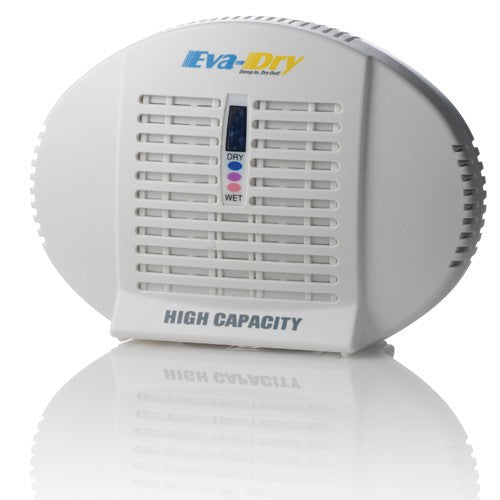
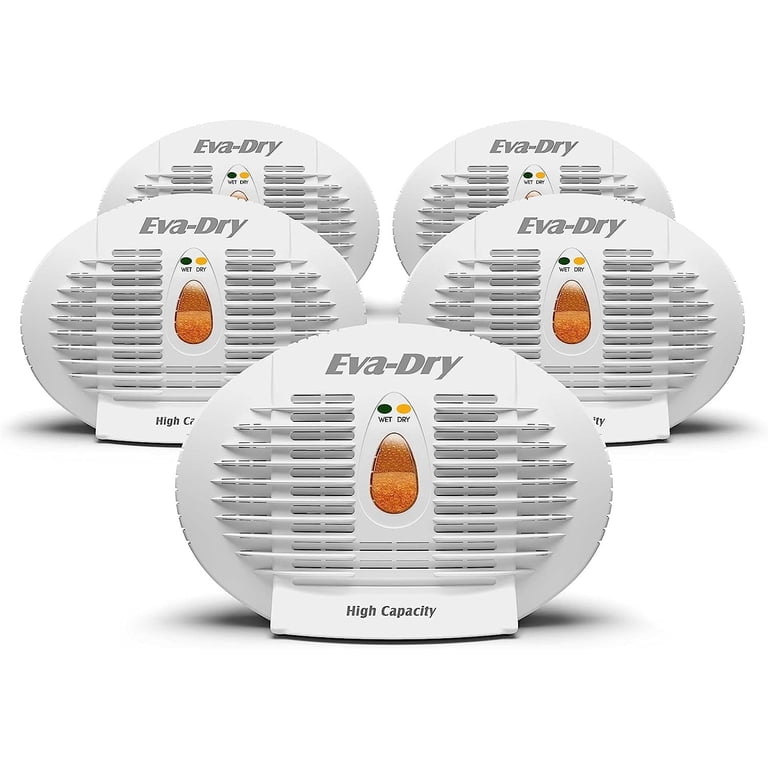
Eva-dry is a small, cordless desiccant device that uses silica gel to absorb moisture. When it “fills,” you plug it in for several hours to dry the beads, then put it back to work. It is simple, safe, and great for tight spaces.
Electric dehumidifiers come in two types for closets. Thermo-electric models use a Peltier chip. They are small, quiet, and run on low power. Compressor models are stronger and pull more water per day, but they are larger and louder. In the Eva-dry vs dehumidifier for closet decision, you’re really choosing between passive absorption and active moisture removal.

How each one works (and why that matters in a closet)
Eva-dry uses silica gel. The beads trap water from the air. You recharge them by heating the unit, which drives moisture back out. No fan, no tank, no drain hose.
Thermo-electric units cool a metal plate, so water condenses and drips into a tank. They are best for mild to moderate humidity. Compressor units chill coils and can pull much more water fast. For Eva-dry vs dehumidifier for closet, this tech gap explains why powered units win in damp, larger closets.
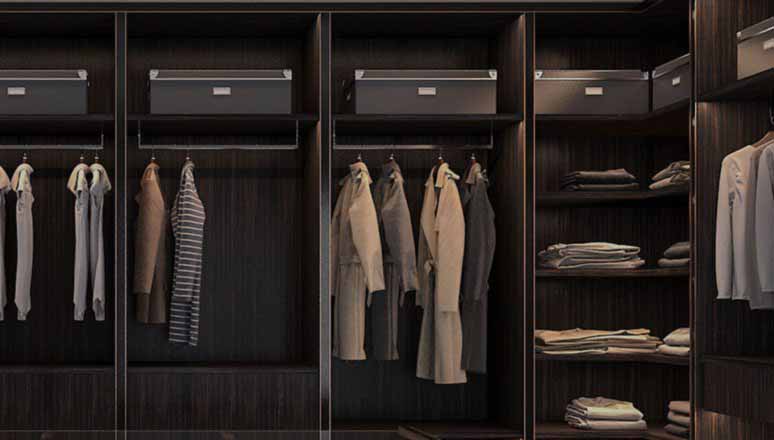
Head-to-head: performance, noise, energy, and upkeep
You want hard numbers and clear wins. Here’s the simple breakdown.
- Moisture pull: Eva-dry absorbs a few ounces over days. Thermo-electric units often collect 0.25–1 pint per day in real closets. Compressors can do several pints per day if the space has airflow.
- Speed: Eva-dry is slow and steady. Powered units drop humidity faster, which matters if you see mold spots or musty smell.
- Energy: Eva-dry uses power only when recharging. A small Peltier unit may draw about 20–40 watts when running. Small compressors draw more, but they do far more work per watt.
- Noise: Eva-dry is silent. Peltier models are very quiet. Compressors hum and vibrate more.
- Upkeep: Eva-dry needs recharges every 2–4 weeks. Peltier models need tank emptying every few days unless you use a hose. Compressors also need tank draining or a hose, plus filter dusting.
- Safety: All are safe when used as directed. Keep any powered unit on a stable shelf, away from clothes and paper.
If you want a quick win for the Eva-dry vs dehumidifier for closet debate, match the tool to the job size and moisture level first.

Sizing your solution for a closet
Closets vary a lot. A tiny linen closet is not a walk-in with an exterior wall. Use this simple plan.
- Check the closet size. Note height, width, and depth. Tight spaces starve air flow.
- Look for moisture sources. Exterior walls, shared bathroom walls, water heaters, or shoes after a workout all add moisture.
- Measure or estimate humidity. Aim for 40–50% RH most of the time. Above 60% encourages mold.
- Match device to the need.
- Small, dry-ish closet with a mild musty smell: Eva-dry can be enough.
- Small to medium closet sitting at 55–65% RH: Go with a Peltier mini dehumidifier.
- Large walk-in or coastal climate at 60–70% RH or more: A small compressor unit works best, often with a drain hose.
This is the heart of Eva-dry vs dehumidifier for closet. Right size equals less mold risk and fewer returns.
Real-world results from my installs
City condo, hall closet: It smelled musty each summer. RH hovered around 52–55%. An Eva-dry unit plus a door gap solved it. The smell faded in a week. We recharge the unit every three weeks.
Coastal home, walk-in closet: RH stuck near 65%. A Peltier unit helped, but not enough. We swapped in a small compressor with a hose through the door sweep. RH dropped to 48% and stayed there. In Eva-dry vs dehumidifier for closet cases like this, powered wins by a mile.

Cost of ownership and eco impact
Upfront price matters, but so does energy over time. Here’s a simple view from my field notes.
- Eva-dry: Low cost upfront. Uses power only during recharges, often a few hours every few weeks. Annual energy use is tiny. Best when you only need a nudge.
- Thermo-electric: Moderate price. Around 20–40 watts while running. If it runs all day, it can add several kWh per month. Still low, but higher than Eva-dry.
- Compressor: Higher price. More watts, but far more water removed per watt. In damp spots, it can be the most efficient way to hit target RH fast.
If you’re doing the math on Eva-dry vs dehumidifier for closet, remember that faster drying prevents mold damage. That can save far more than a few dollars of energy.
Placement, airflow, and safety tips for closets
Good setup beats raw power. Use these tips to get results fast.
- Place units where air can move. Upper shelf or center floor, not jammed in a corner.
- Leave a small gap around the device. Do not press it into hanging clothes.
- Keep the closet door cracked or add a louvered panel. Air exchange helps a lot.
- For Peltier or compressor units, drain with a hose if you can. No full tank means no shutoff.
- Recharge Eva-dry before the beads are fully saturated. Staying ahead works better.
- Wipe dust from intake grills. Dust cuts performance.
These small tweaks can flip the outcome in Eva-dry vs dehumidifier for closet setups.

Common mistakes and quick fixes
I see the same errors again and again. Avoid these simple traps.
- Picking a tiny unit for a damp walk-in. Fix it by sizing up the device.
- Blocking airflow with coats and boxes. Clear a small buffer zone around the unit.
- Sealing the door tight. Add a vent gap or crack the door to improve exchange.
- Ignoring wet sources. Dry shoes, shower steam, and laundry matter. Fix the source first.
- Skipping maintenance. Empty tanks, clean filters, and recharge on time.
These basics decide who wins in Eva-dry vs dehumidifier for closet battles.
Frequently Asked Questions of Eva-dry vs dehumidifier for closet
Below are quick answers to common Eva-dry vs dehumidifier for closet questions to guide your choice.
Is Eva-dry enough for a walk-in closet?
Usually not. Walk-ins hold more moisture and need airflow, so a powered unit is the safer pick.
How often do I recharge an Eva-dry in a closet?
Plan on every two to four weeks. High humidity or a tight closet will shorten that cycle.
Are Peltier dehumidifiers good for closets?
Yes, for small to medium closets with mild to moderate humidity. They are quiet, compact, and easy to maintain.
Will a compressor dehumidifier over-dry clothes?
Not if you use a humidistat and set it to 45–50% RH. That range protects fabrics and stops musty smells.
Do I need a drain hose for a closet dehumidifier?
It helps a lot. A hose keeps the unit running without stops, which is key if humidity stays high.
What’s the best humidity level for closets?
Aim for 40–50% RH. Above 60% RH, mold risk rises and odors grow fast.
Which is more energy efficient, Eva-dry or an electric dehumidifier?
Eva-dry uses less energy overall, but it also removes less moisture. For wet closets, a small compressor can be more efficient per pint removed.
Conclusion
Pick the tool that fits your space, not the label. For tiny, only-slightly-damp closets, Eva-dry is simple and cheap. For larger or wetter closets, a powered unit wins, and that is the core of Eva-dry vs dehumidifier for closet.
Take five minutes to size your closet, check RH, and decide on airflow. Then choose your device and set it up right. Ready to solve it for good? Share your closet size and humidity, and I’ll help you map the best plan.