

Keep piano humidity between 42–50% to avoid cracks, rust, and tuning drift.
If you care about tone, touch, and tuning, moisture control for piano is non‑negotiable. I’ve serviced living room uprights and concert grands for years, and the best results always come from steady humidity. In this guide, I’ll show you what works, what fails, and how to build a simple plan for moisture control for piano that fits your home and your climate.

Why humidity matters for pianos
Pianos are mostly wood, felt, and metal. Wood swells when damp and shrinks when dry. Felt gets spongy or brittle. Strings and pins can rust. This shift changes tone and tuning. It also stresses glue joints and the soundboard.
The soundboard crown is key. Too much moisture pushes the crown up. Pitch rises and the tone turns harsh. Too little moisture flattens the crown. Volume drops and the tone sounds thin.
Good moisture control for piano protects action parts, keys, and bridges. It keeps the touch even. It also protects value. I have seen small humidity swings cut tuning drift in half.

Ideal ranges and simple targets
Aim for 45% relative humidity, plus or minus 5%. Keep room temperature near 68–72°F. Try to limit daily swings to under 5% RH.
Use a digital hygrometer near the piano. Place it at key height, away from vents and windows. Check it at the same time each day.
If you suspect a bad reading, do a simple salt test. Seal the hygrometer in a bag with a small cup of damp salt. After 8 hours, it should read near 75% RH. Adjust if your model allows.
Moisture control for piano is not about chasing perfect numbers. It is about steady conditions.

Signs your piano needs moisture control
- It goes out of tune fast. Big seasonal swings mean frequent service.
- Keys feel sticky, sluggish, or uneven. Felt has taken on moisture.
- Notes buzz or ring oddly. Bridges or soundboard may be shifting.
- You see rust on strings or tuning pins. That is a red flag.
- The wood shows hairline cracks, ripples, or lifted veneer.
- There is a musty smell in or around the case.
If you see two or more signs, tighten your plan for moisture control for piano.
Tools and systems that work
Hygrometers
- Use one reliable digital hygrometer. Two is better for cross‑check.
- Place one near middle C at key height.
- Log readings weekly. Snap a photo to keep it easy.
Room humidifiers
- Best for dry winters or high‑altitude homes.
- Choose evaporative or cool mist with auto mode.
- Use distilled water to cut mineral dust. Clean weekly.
Room dehumidifiers
- Best for damp basements or coastal summers.
- Size it to room square footage. Use a hose drain if you can.
- Empty and rinse the tank often.
Whole‑house systems
- Great if you have forced air HVAC.
- Adds cost up front but gives steady results.
- Still keep a hygrometer by the piano.
In‑piano systems
- Popular choices include rod heaters plus a humidifier bar.
- They stabilize the micro‑climate inside the case.
- Refill water and change pads as directed. Keep it clean.
Covers, mats, and extras
- A padded cover helps against drafts and sun.
- A thin rug under a grand cuts floor moisture transfer.
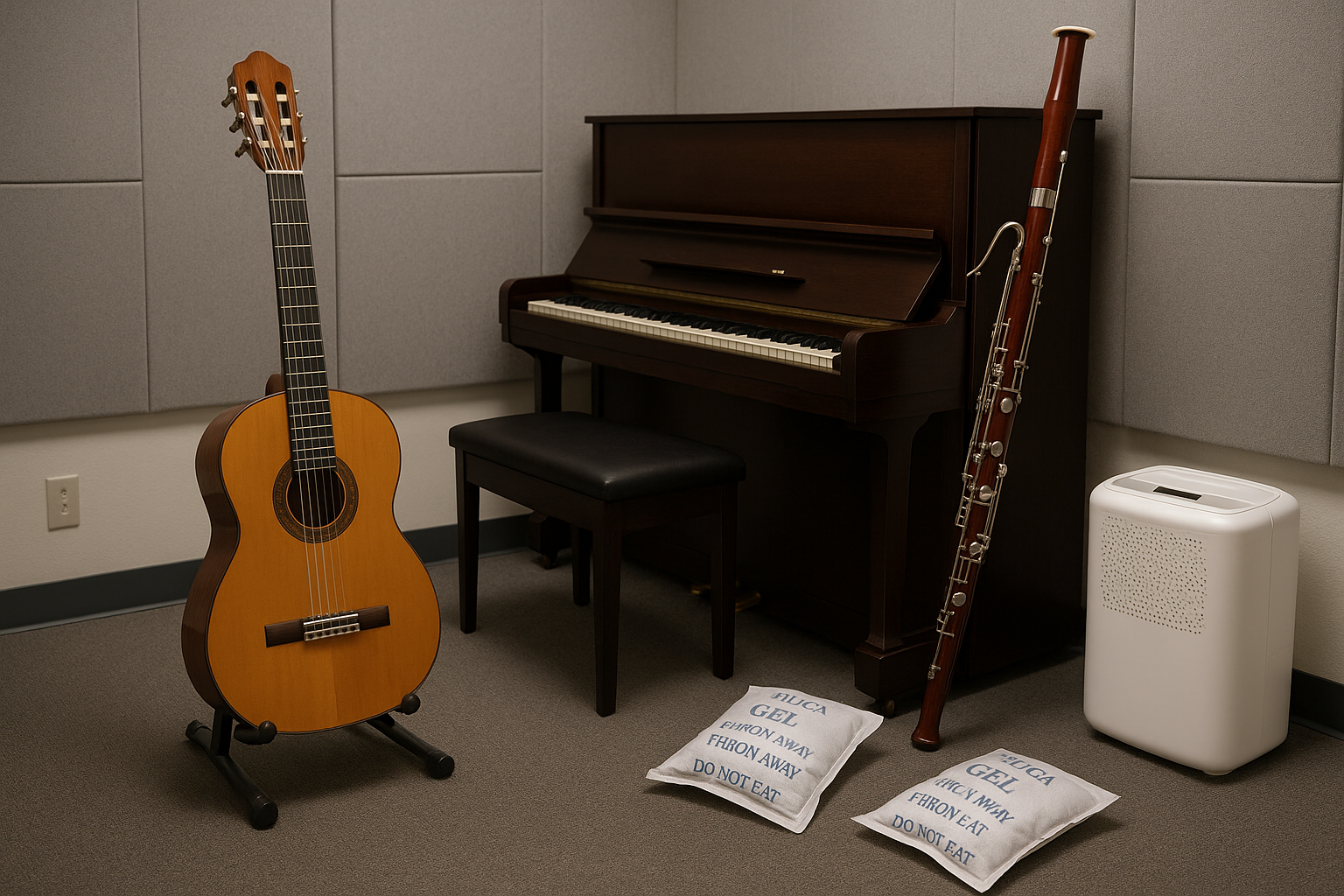
- Avoid loose desiccant packs. They are weak and easy to forget.
From my bench, a combo works best. A room unit plus an in‑piano system gives strong moisture control for piano with fewer swings.

Placement and room setup that helps
Keep the piano away from exterior doors, fireplaces, heaters, and AC vents. Do not place it in direct sun. Avoid exterior walls if you can. Windows and radiators cause big swings.
For uprights, leave a small gap from the wall. For grands, keep the tail away from windows. Heavy curtains and bookshelves help buffer the air. Rugs on hardwood floors slow moisture rise from crawl spaces.
If the piano must live in a basement, run a dehumidifier full time in summer. Check RH twice a day at first. Good room habits reduce the load on moisture control for piano.

Season‑by‑season plan
Winter
- Heat dries the air. Add a room humidifier or whole‑house unit.
- Refill daily during cold snaps.
- Check RH morning and night.
Spring
- Swings can be wild. Watch the hygrometer and adjust fast.
- Run auto mode on your humidifier or dehumidifier.
Summer
- Humidity rises. Start the dehumidifier early.
- Close windows on wet days. Use AC to stabilize RH.
Fall
- Tune and log a fresh baseline.
- Service in‑piano systems and replace pads.
- Review your year of readings and note problem weeks.
This rhythm makes moisture control for piano simple and repeatable.

Moisture control for piano in different climates
Dry mountain or desert areas
- Humidify from October to April or longer.
- Use in‑piano systems to stop overnight dips.
Humid coastal or lake regions
- Dehumidify from late spring to fall.
- Seal gaps around windows and doors.
Four‑season regions
- Expect two main shifts. Plan a tune as heat goes on and again when AC starts.
- Keep logs so you can act before issues show up.
Travel a lot? Set alerts on a smart hygrometer. Remote checks help you keep moisture control for piano on track.
Acoustic vs digital pianos
Acoustic pianos need strict control. Their wood and felt change fast. Digital pianos have circuit boards and key actions that still dislike damp air and dust. High humidity raises corrosion risk. Very dry air can make plastics brittle and noisy.
If you own both, follow the same room targets. A steady room is low‑stress for practice and care. Good moisture control for piano helps all instruments in the space.
Cost, ROI, and mistakes to avoid
Typical costs
- Digital hygrometer: low.
- Room humidifier or dehumidifier: low to medium.
- In‑piano system with install: medium.
- Whole‑house setup: higher.
Return on investment comes from longer action life, fewer repairs, and better stability. You also enjoy a consistent tone and touch.
Common mistakes
- Chasing daily perfection and moving devices too often.
- Letting tanks get slimy. Clean on a schedule.
- Placing the piano by a sunny window or vent.
- Using tap water that leaves white dust.
- Ignoring logs. Data drives better moisture control for piano.
Frequently Asked Questions
What humidity is best for my piano?
Aim for 45% RH, plus or minus 5%. Keep the daily swing small, and you will hear steadier tuning.
Do I need an in‑piano system if I have a room humidifier?
If your home swings a lot, yes. In‑piano systems stabilize the micro‑climate and support room devices.
How often should I check humidity?
Daily at first, then a few times a week. Use the same time of day for cleaner data.
Can I keep a piano in a basement?
Yes, with care. Run a dehumidifier, add a rug, and monitor RH closely in summer.
Will moisture control reduce tuning visits?
Often, yes. Stable humidity slows drift, so tunings last longer and the tone stays even.
Is distilled water necessary?
It helps. Distilled water cuts mineral dust and keeps humidifiers cleaner for longer.
Conclusion
A steady climate is the best gift you can give your instrument. Aim for a narrow humidity band, set up smart tools, and build a simple routine. With consistent moisture control for piano, you protect tone, touch, and value.
Pick one action today. Place a hygrometer, log this week, and adjust one device. Want more practical tips? Subscribe for updates or drop your questions in the comments.