

Over decades, smart moisture control pays for itself and prevents costly repairs.
If you are weighing the long-term cost of moisture control, you are already ahead. I have spent years inspecting homes, fixing damp spaces, and tracking lifetime bills. I will break down real numbers, show where money leaks, and share what actually works. Read on to see how the long-term cost of moisture control compares to damage, energy waste, and health costs you can avoid.

What drives the long-term cost of moisture control
Moisture moves in three ways: leaks, vapor, and air. You pay to block each path. The long-term cost of moisture control is a mix of setup, energy, and care. It also includes avoided repairs and health gains.
Here are the cost drivers most owners see:
- Climate and soil type Wet climates or high water tables raise risk and cost.
- Building age and design Older homes often have weak air seals, poor drainage, and mixed materials.
- Source of moisture Roof and plumbing leaks cost more than mild humidity.
- Ventilation and HVAC balance Poor airflow traps moisture and stresses equipment.
- Materials and finishes Wood, drywall, and carpet all react to damp air in different ways.
I use a simple rule on jobs. First stop liquid water. Then control air flow. Then manage humidity. This order cuts the long-term cost of moisture control because you target the main risks first.
The hidden costs when you ignore moisture
Moisture is a slow leak in your wallet. It harms the parts you do not see. You pay later in bigger chunks.
Common hidden costs I see:
- Structural damage Rotting subfloors, rim joists, and sill plates can run 3,000 to 15,000 dollars.
- Mold remediation Remediation for a mid-size room often runs 1,500 to 6,000 dollars.
- Energy waste Damp air takes more energy to heat or cool. Bills can rise 10 to 20 percent.
- HVAC wear Corrosion shortens life. A new system can cost 6,000 to 12,000 dollars.
- Insurance impacts Claims for water damage may raise premiums 100 to 500 dollars per year.
- Health costs Damp homes can worsen asthma and allergies. You may pay in lost work days and care.
The long-term cost of moisture control looks modest next to these bills. Small fixes stop big losses.
Upfront investments vs lifetime savings
Think of moisture control like a roof. You pay once and save for years. The math works when you look at the life of the house.
Typical investments and ranges I see:
- Downspout extensions and grading 150 to 1,000 dollars. Big savings for small cost.
- Sump pump with battery backup 800 to 2,000 dollars. Prevents flood losses.
- Crawl space encapsulation 3 to 7 dollars per square foot. Cuts humidity and energy use.
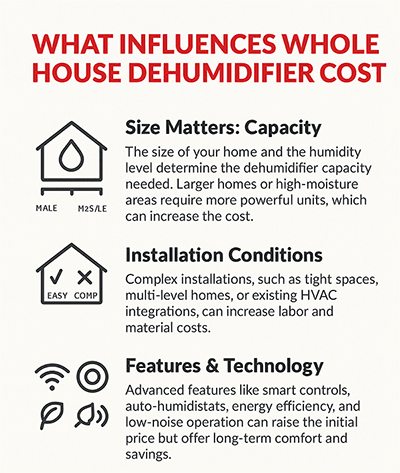
- Dehumidifier Whole-home units can be 1,200 to 2,500 dollars plus 100 to 300 dollars per year to run.
- Bath and kitchen vent fans 150 to 600 dollars each. Move moisture outside fast.
- Roof and flashing upgrades 500 to 3,000 dollars for small repairs. Stop leaks at the source.
- Vapor barrier under slab or crawl 0.50 to 2.00 dollars per square foot.
The long-term cost of moisture control includes energy and upkeep. But it often pays back in 3 to 7 years through avoided repairs and lower energy use.
Cost breakdown by space
Every area needs its own plan. Here is what I recommend and what it tends to cost over time.
Basements
- Drainage and grading Move water away. Low cost, high impact.
- Sump and discharge Keep backup power.
- Seal cracks with epoxy Stop capillary leaks.
Crawl spaces
- Encapsulate and seal Add vapor barrier, sealed vents, and a dehumidifier if needed.
- Insulate the walls Not the floor, in many cases, to keep ducts and pipes in the conditioned zone.
Attics
- Air seal penetrations Around lights, ducts, and hatches.
- Vent the roof line Ridge and soffit vents if design allows.
- Check bath fans Make sure they vent outside.
Bathrooms and kitchens
- Right-sized fans Aim for 1 cfm per square foot in small baths, minimum 50 cfm.
- Run fans long enough Use a timer for 20 to 30 minutes after showering.
- Fix caulk and grout Seal joints once a year.
Exteriors
- Gutters and downspouts Keep them clear and extend discharge 6 to 10 feet.
- Siding and flashing Verify kick-out flashing at roof-to-wall joints.
- Grade slope Keep soil sloping away at least 6 inches over 10 feet.
When you plan across zones, the long-term cost of moisture control drops because systems support each other.

Real numbers from the field
A 1920s bungalow had damp crawl air, cupped floors, and musty rooms. We fixed grading, added a vapor barrier, sealed vents, and set a small dehumidifier. Total installed cost was 4,800 dollars. Power use added about 120 dollars per year. After year one, the owner avoided a 3,500-dollar floor repair and cut summer bills by about 12 percent. The long-term cost of moisture control here was far lower than the repair that never came.
A newer home had bathroom fans that vented to the attic. Mold formed on sheathing in two winters. We vented outside, air sealed, and boosted attic airflow. The work cost 1,900 dollars. Roof sheathing replacement would have been 8,000 dollars. The long-term cost of moisture control was a fraction of the risk.

Maintenance that protects your investment
Moisture control is not set-and-forget. A little care keeps systems working and costs low.
Quarterly
- Clean gutters and check downspouts Make sure water flows clear.
- Look at sump discharge Confirm the check valve and test the pump.
Twice a year
- Inspect caulk and flashing Seal gaps around windows, doors, and roof lines.
- Check fans and filters Clean grilles and replace filters in HRV or ERV units.
Annually
- Service dehumidifiers Clean coils and drains.
- Test indoor humidity Aim for 30 to 50 percent in most seasons.
- Walk the exterior Look for grading issues and standing water.
These steps shrink the long-term cost of moisture control by stopping small issues before they grow.
How to estimate your long-term cost of moisture control
Use this simple framework to plan over 10 years.
Step 1: List risks
- Note leaks, damp smells, high humidity, and past damage.
Step 2: Price fixes
- Get prices for drainage, sealing, fans, and dehumidification.
Step 3: Add operating costs
- Estimate energy and filter changes each year.
Step 4: Add maintenance
- Budget small checks and cleanings.
Step 5: Count savings and avoided losses
- Add reduced energy costs and the repairs you likely avoid.
Step 6: Compare totals
- Long-term cost of moisture control equals all fixes plus energy and care, minus savings and avoided damage.
I often see a 10-year plan come out 30 to 70 percent cheaper than letting moisture run its course.

Financing, rebates, and insurance impacts
You can lower the long-term cost of moisture control with smart funding.
Options to explore:
- Utility rebates for fans, HRV or ERV units, or dehumidifiers Some programs help pay for high-efficiency gear.
- Low-interest loans for energy and health upgrades These spread the upfront cost.
- Insurance discounts for mitigation Sump pumps with backup and leak sensors can reduce risk.
- Tax incentives for weatherization Air sealing and insulation that help moisture control may qualify.
Ask your utility and local programs about offers. The long-term cost of moisture control often drops when you stack incentives.

Health and comfort returns you can measure
Moisture control is not only about wood and walls. It affects how you breathe and sleep. Dry enough air slows mold growth and dust mites. That can help reduce allergy and asthma flares. Families tell me rooms feel fresher. Clothes in closets no longer smell. Electronics last longer. These are real gains that support the long-term cost of moisture control.
If you track humidity with small sensors, you can see the change. Aim for 30 to 50 percent. In hot, humid zones, staying under 55 percent is a good mark.
Common mistakes that raise lifetime costs
I see the same errors over and over. Avoid them to cut the long-term cost of moisture control.
- Treating symptoms, not sources A dehumidifier cannot fix a roof leak.
- Venting fans into the attic Always vent outside.
- Forgetting air sealing Air leakage carries lots of moisture.
- Skipping grading and gutters Rain at the foundation keeps basements damp.
- Oversizing or undersizing gear Match the tool to the load and space.
- No maintenance Small clogs cause big failures.
A little planning saves thousands and keeps the long-term cost of moisture control under control.
Frequently Asked Questions of long-term cost of moisture control
How much should I budget each year for moisture control?
Plan for 100 to 300 dollars per year for basic maintenance and energy. Complex systems or large homes can be higher.
Is a dehumidifier enough on its own?
It helps, but it is not a fix for leaks or poor drainage. Stop water entry first, then manage humidity.
What indoor humidity is best to prevent mold?
Keep relative humidity near 30 to 50 percent. Staying under 55 percent is a practical goal in humid climates.
Will moisture control lower my energy bills?
Yes, in many homes. Drier air reduces load, and air sealing cuts leaks, often saving 10 to 20 percent.
How long do the benefits last?
Well-installed systems can protect for decades with simple care. Many owners see payback within 3 to 7 years.
Do I need both ventilation and dehumidification?
Often yes. Ventilation removes moist air at the source, and dehumidifiers handle residual load.
Can I DIY moisture control?
You can do grading, gutter work, and fan upgrades. Leave structural repairs and big encapsulations to pros.
Conclusion
Moisture is a small problem that grows into big bills if you let it. With a clear plan, you can make smart fixes, lower risk, and keep your home healthy. The long-term cost of moisture control is almost always lower than the cost of damage, higher energy use, and stress.
Start with sources, then airflow, then humidity. Set a simple maintenance routine and track your indoor levels. Ready to protect your home and budget? Save this guide, price your top two fixes this week, and subscribe for more hands-on tips.