

Ventilate, add desiccants, seal leaks, and lower humidity inside and around closets.
If your clothes smell musty or feel damp, you’re not alone. I’ve solved countless closet humidity issues in apartments, basements, and busy family homes. In this guide, you’ll learn how to reduce moisture in closet with simple steps that work, backed by building science and real-life fixes. Stick with me, and you’ll turn that damp, closed box into a fresh, dry space that protects your clothes, shoes, and peace of mind.
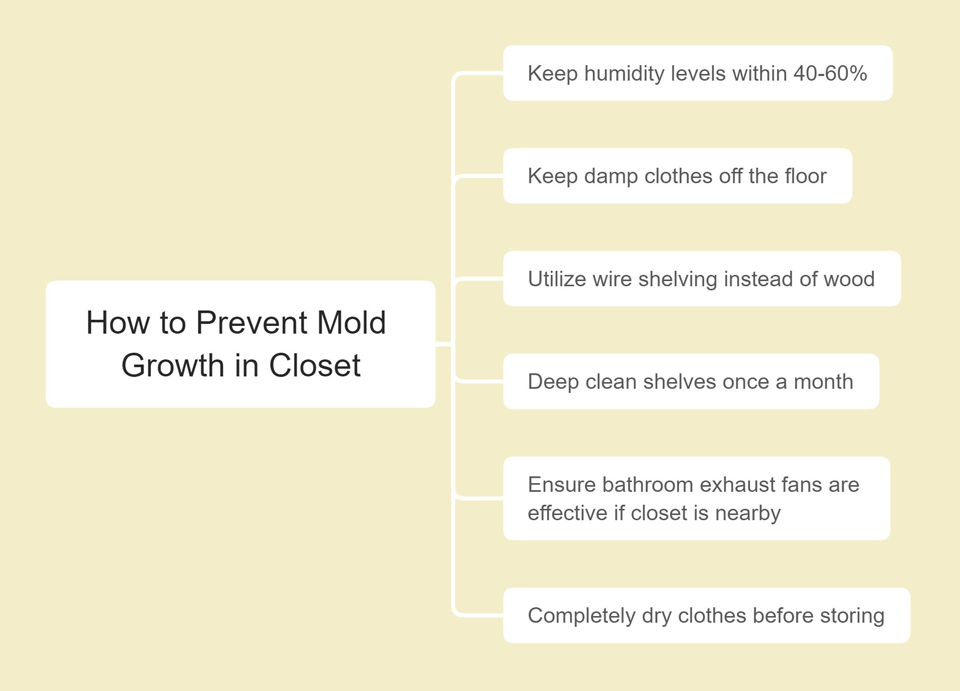
What causes closet moisture
Moisture builds when humid air gets trapped in a tight space. Lack of airflow means sweat, shower steam, and outdoor humidity linger. Cold walls or floors make the air cool down and drop moisture on surfaces.
Hidden leaks also play a part. A slow pipe drip, a roof issue, or a nearby bathroom can raise moisture. Even wet shoes or laundry push humidity up inside the closet.
Most homes do best at 30% to 50% relative humidity. Over that, the risk rises fast. Knowing the causes helps you focus on how to reduce moisture in closet in a targeted, effective way.
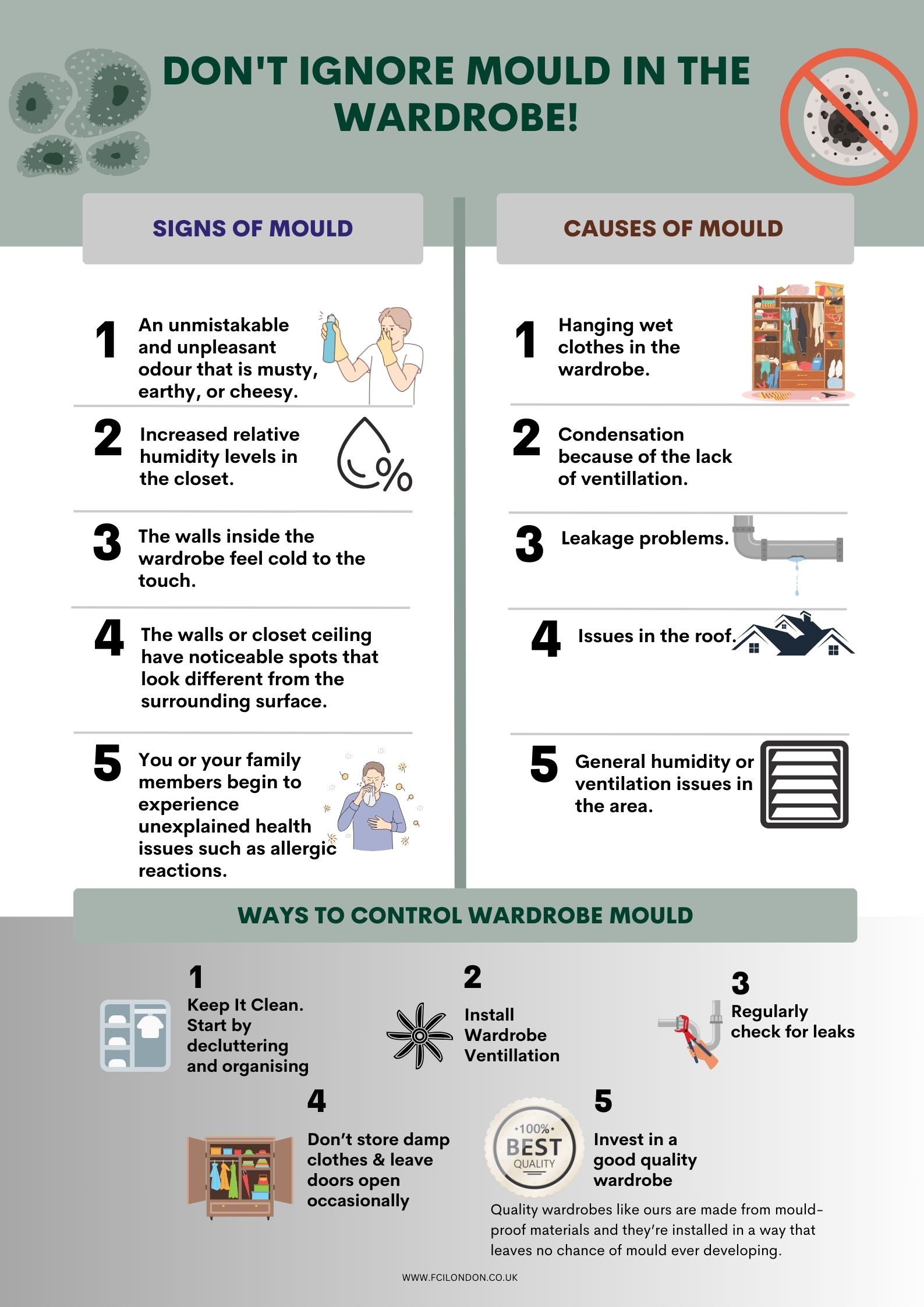
Signs you have a moisture problem
You do not need fancy tools to spot trouble. These signs are enough to act now.
- Musty or sour odor that returns after cleaning
- Damp fabric, warped shoe boxes, or sticky drawers
- Condensation on walls, doors, or windows near the closet
- Rust on hangers or hardware
- Spots on ceilings or baseboards nearby
If you see spots that smear or spread, you may have mold. That means it’s urgent to learn how to reduce moisture in closet before damage gets worse.

Quick steps: how to reduce moisture in closet right now
You can act today. These steps are fast and low-cost.
- Open it up. Keep the door open for a few hours each day.
- Add air. Place a small fan or use a fan mode on your HVAC to move air.
- Use desiccants. Put calcium chloride or silica gel tubs on shelves.
- Remove wet items. No damp towels, shoes, or gym gear inside.
- Space your clothes. Leave gaps so air can flow between hangers.
- Clean surfaces. Wipe walls and shelves with mild cleaner and let them dry.
These moves are simple, but they work. When I show clients how to reduce moisture in closet, these are the first steps we use. They bring quick relief in most homes.

Ventilation that works for closets
Airflow is the secret sauce. If air moves, moisture drops. Here are solid options you can install or try.
- Louvered or vented doors let air circulate without leaving the closet open.
- Add a passive vent at the top and bottom of the door for a stack effect.
- If the closet backs a bathroom, use the bath fan longer after showers.
- A quiet, low-watt fan can run on a timer for 15 minutes twice a day.
- Central air helps too. Set the system’s fan to circulate on schedule.
Keep room humidity between 30% and 50%. Most indoor air guidelines back that range. Good airflow is the backbone of how to reduce moisture in closet for the long term.

Moisture absorbers that actually help
Not all products are equal. Here is what works and how to use them well.
- Desiccant tubs with calcium chloride pull a lot of water fast. Place them low and empty often.
- Silica gel pouches are cleaner and reusable. Bake or recharge per label.
- Activated charcoal helps with odor and light moisture. Replace every few weeks.
- Compact dehumidifiers are great for bigger closets. Pick models with auto shutoff.
Track results with a small digital hygrometer. It shows humidity in real time. I keep one in my own hall closet, and it teaches me how to reduce moisture in closet by showing what changes actually work.

Organize your closet to stay dry
Clutter traps moist air. A clean layout dries faster and stays fresh.
- Keep a two-finger gap between hangers to let air move.
- Swap cardboard boxes for plastic bins with small vents.
- Use wood or metal hangers instead of foam ones that hold moisture.
- Store shoes dry and clean. Use cedar shoe trees to absorb moisture.
- Lift items off the floor where air is cooler and damp.
Small choices matter here. This setup helps your home systems do their job and supports how to reduce moisture in closet every day.

Seasonal checklist and maintenance
Moisture needs routine care. This simple checklist keeps you ahead.
Spring
- Check for leaks after heavy rain.
- Wash and dry winter coats fully before storing.
Summer
- Run a dehumidifier in the room if humidity spikes.
- Use the bath fan longer on sticky days.
Fall
- Clean dust from shelves and baseboards so air can move.
- Replace or recharge desiccants.
Winter
- Watch for condensation on outside walls.
- Keep door vents clear if you use space heaters nearby.
Make a note on your phone to rotate desiccants monthly. It is an easy habit and a smart way to practice how to reduce moisture in closet year-round.

When moisture means mold: safety and cleanup
If you see small spots (under 10 square feet), you can often handle them safely.
- Wear gloves and a mask. Ventilate well.
- Clean hard surfaces with a detergent solution. Dry fully.
- Launder fabrics on hot if safe for the fabric. Dry on high heat.
If the area is larger, or if you smell a strong musty odor you cannot place, call a pro. Mold can hide in drywall or behind baseboards. Safety first always. This is also part of how to reduce moisture in closet the right way: fix the source and the surface.

When to call a pro and cost basics
Call a licensed pro if you find leaks, stained ceilings, or chronic humidity. A plumber can find slow drips. An HVAC tech can test airflow and balance your system. A building pro can check for hidden moisture with a thermal camera.
Typical costs vary by city. A basic vented door upgrade is often modest. Leak fixes can range more, but they stop ongoing damage. Think of it as insurance. It protects your wardrobe and your home’s value while you learn how to reduce moisture in closet for good.
Frequently Asked Questions of how to reduce moisture in closet
How long does it take to dry a damp closet?
Most closets improve within 24 to 72 hours with airflow and desiccants. Bigger issues like leaks take longer and need repairs.
Will baking soda reduce moisture in a closet?
Baking soda helps with odors but has limited moisture control. Use it with silica gel or calcium chloride for better results.
Is a dehumidifier safe to run in a closet?
Yes, if it has space around it and an auto shutoff. Empty the tank often or use a drain hose as directed.
What humidity level should I aim for in closets?
Aim for 30% to 50% relative humidity. This range helps prevent mold and protects fabrics and leather.
Can I just leave the closet door open?
Leaving the door open helps, but it may not be enough. Pair it with desiccants or a fan for a full plan on how to reduce moisture in closet.
Do cedar blocks actually work for moisture?
Cedar helps absorb small amounts and controls odor. Use it as a supplement, not your only tool.
Should I install a vent in the closet door?
A vent or louvered door improves airflow and reduces trapped moisture. It is a simple upgrade that supports how to reduce moisture in closet.
Can wet shoes cause mold in a closet?
Yes, wet shoes raise humidity and can lead to mold on nearby items. Dry them fully before storing.
Conclusion
Moisture in a closet is common, but it is very fixable. Open the space, add airflow, use the right absorbers, and find any leaks. Keep humidity in the safe range, and reorganize so air can do its job. That is the heart of how to reduce moisture in closet.
Start today with one quick win: add a desiccant and prop the door open for a few hours. Then build your plan with better ventilation and a simple checklist. If you found this helpful, share it with a friend, subscribe for more home tips, or drop your questions in the comments so we can tackle how to reduce moisture in closet together.